Allisttha: A Vintage Script Font for Web Design
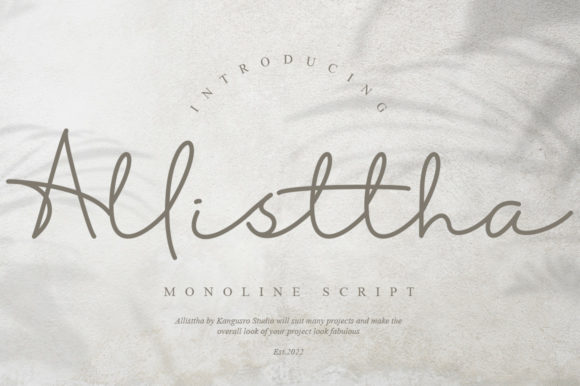
As a web designer, I’m always on the lookout for fonts that bring personality to a site without sacrificing readability. Allisttha is one of those rare finds—a vintage-style script font that adds elegance and charm to digital projects. Whether it’s a hero section, a call-to-action button, or a branding element, Allisttha has a way of making content feel more intentional and expressive.
Testing Allisttha in Real Web Layouts
I first tried Allisttha while working on a boutique online store’s homepage. The goal was to create a clean yet inviting visual identity that felt warm and approachable. Using Allisttha for the main headline, I noticed how its flowing strokes and subtle flourishes gave the design a handcrafted feel. It wasn’t just a font—it felt like an extension of the brand’s story.
On mobile screens, Allisttha held up surprisingly well. I tested it on smaller buttons and headers, and while it’s not ideal for long paragraphs, it worked beautifully as a decorative title. When placed over image banners or dark backgrounds, the font maintained enough contrast to remain legible without feeling overwhelming.
Using Allisttha for Digital Branding
One of the most compelling aspects of Allisttha is how it can elevate a website’s tone. For a creative portfolio site, I used it for project titles and section headings. The font added a sense of sophistication that matched the client’s artistic style. It also paired well with a simple sans serif for body text, creating a balanced visual hierarchy.
In a coaching website redesign, I experimented with Allisttha for the hero section. The font’s vintage aesthetic complemented the site’s minimalist layout, adding a touch of timeless elegance. It didn’t overpower the content but instead supported it, making the message feel more personal and authentic.
Best Uses for Allisttha in Web Design
Allisttha shines in areas where visual impact matters most. Hero sections, CTA buttons, and logo text are all excellent places to use it. Its ornate details make it perfect for short phrases, such as “Welcome” or “Explore Our Work,” where the font can be seen without becoming a distraction.
For a product landing page, I used Allisttha to highlight key features. The font’s organic flow made the copy feel more engaging, especially when paired with soft background textures. It helped guide the user’s eye through the page without needing additional design elements.
When designing a blog header, Allisttha added a refined touch that set the tone for the content. It worked best when used sparingly, allowing the rest of the design to breathe. I found that using it for the site name or a featured post title created a cohesive and stylish look.
Readability and Responsive Design Considerations
While Allisttha is visually striking, it’s important to consider its limitations. On small screens or in tight spacing, the font can become difficult to read. I avoided using it for navigation menus or form labels, opting instead for a cleaner typeface in those areas.
For accessibility, I paired Allisttha with a bold sans serif for headings and subheadings. This combination allowed the font to stand out without compromising clarity. I also made sure to test it on both light and dark backgrounds, adjusting spacing and contrast as needed.
When used in responsive layouts, Allisttha scaled well across devices. I made sure to adjust font sizes and line heights for mobile views, ensuring that the typography remained readable and aesthetically pleasing.
Font Pairing and Webfont Availability
One of the keys to successfully using Allisttha is knowing how to pair it with other fonts. I often combined it with a modern sans serif for body text, which created a nice balance between style and functionality. For editorial designs, pairing it with a simple serif font gave the site a more traditional, book-like feel.
Before implementing Allisttha on a live site, I checked its webfont availability and licensing. It’s important to ensure that the font is properly licensed for commercial use, especially if it’s being used on a client’s website or an online store. I also verified that it included alternate characters and ligatures, which added flexibility for custom designs.
For a digital brand kit, I used Allisttha for the logo and social media graphics. The font’s versatility allowed it to work across different formats, from website headers to email templates. It also supported multiple languages, which was a big plus for international clients.